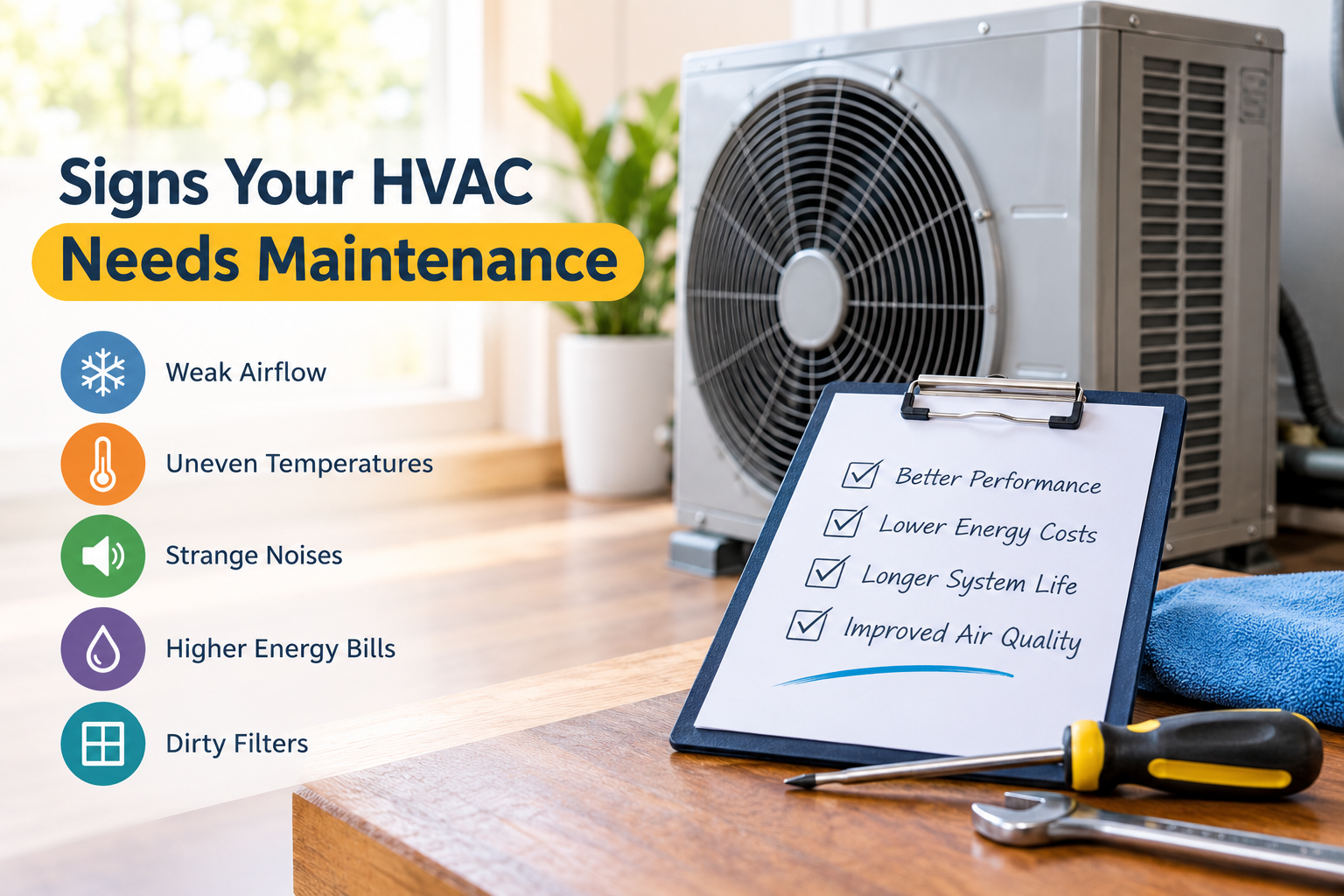
There’s a particular kind of dread that hits homeowners in Attleboro, MA when the furnace makes a weird clunking noise on the coldest night of January. Nobody wants an HVAC emergency, but the frustrating part is that most breakdowns don’t happen out of nowhere they build up slowly, dropping hints along the way that most people simply miss. Catching the signs HVAC needs maintenance early can be the difference between a routine tune-up and an emergency replacement bill you weren’t planning for.
Let’s walk through the five signs that actually matter, along with what they typically mean in practice.
1. Strange Noises Coming From the Unit
A healthy HVAC system runs with a fairly consistent hum. Once you start hearing banging, rattling, squealing, or grinding, something’s off and ignoring it rarely makes it go away on its own.
A homeowner in Attleboro noticed a faint rattling sound from their furnace every time it kicked on, but assumed it was just an old unit settling. Three weeks later, that “settling” turned out to be a loose blower motor component, and what would’ve been a simple tightening job during routine HVAC Maintenance turned into a more involved repair once the part started grinding against the housing.
Squealing often points to belt issues, while grinding usually suggests something mechanical wearing down. Either way, these noises are your system’s way of asking for attention before it fully gives out.
2. Hot and Cold Spots That Won’t Even Out
If one bedroom feels like a sauna while another stays stubbornly cold, that’s rarely a coincidence it’s typically a sign of airflow problems, ductwork issues, or a system struggling to keep up with demand.
A family in a two-story Attleboro home noticed their upstairs bedrooms were consistently 8-10 degrees warmer than the main floor during summer. After a technician inspected the system, it turned out the ductwork had a partial blockage that had gone unnoticed for months. Regular HVAC Maintenance likely would’ve caught this during a routine filter and duct inspection, well before it became a comfort issue serious enough to prompt a service call.
This unevenness tends to get worse over time rather than resolve on its own, so it’s worth addressing sooner rather than later.
3. Rising Energy Bills Without a Clear Reason
When your HVAC system starts losing efficiency, it has to work harder to maintain the same temperature and that extra strain shows up directly on your utility bill. If your energy costs are climbing noticeably compared to the same month last year, and you haven’t changed your habits, your system might be quietly struggling.
A homeowner in Attleboro noticed their winter heating bill jumped nearly 20% compared to the previous year (a figure worth verifying against your own utility statements rather than assuming this percentage applies universally). After scheduling HVAC Maintenance, the technician found a dirty condenser coil and a clogged filter both relatively simple fixes that had been forcing the furnace to run longer cycles than necessary.
This is one of those signs that’s easy to overlook since energy costs fluctuate for lots of reasons, but a sustained, unexplained increase is worth investigating.
4. Weak or Inconsistent Airflow
Standing near a vent and noticing weak airflow, or air that used to feel strong now barely trickling out, usually points to a few possible culprits: a failing blower motor, a clogged filter, or duct issues restricting airflow.
A resident in Attleboro dealing with a Furnaces issue noticed their vents were barely pushing air compared to previous winters. It turned out their air filter hadn’t been changed in nearly a year, which had gradually restricted airflow enough to strain the entire system. This is a genuinely common scenario, and it’s exactly the kind of thing routine HVAC Maintenance visits are designed to catch before it escalates into a bigger repair.
If you’ve got Ductless Mini Splits or Heat Pumps installed, weak airflow can also point to refrigerant issues or a failing compressor, which typically need a licensed technician to properly diagnose rather than a DIY fix.
5. Frequent Cycling On and Off
If your HVAC system seems to be turning on and off more frequently than usual a pattern called short cycling that’s often a sign of an oversized unit, a failing thermostat, or a system nearing the end of its functional lifespan.
A homeowner in Attleboro with an aging furnace noticed it was cycling on and off every 10-15 minutes rather than running full, steady cycles like it used to. A technician determined the heat exchanger was beginning to fail, a repair that HVAC Repair services could sometimes address depending on severity, though in more advanced cases, full HVAC Installation of a new unit becomes the more practical long-term solution.
Short cycling isn’t just annoying it puts additional wear on system components and tends to accelerate whatever underlying problem is already occurring.
Why Regular Maintenance Actually Matters
Beyond just catching problems early, consistent HVAC Maintenance genuinely extends the lifespan of your system and keeps it running more efficiently overall. Manufacturers typically recommend seasonal check-ups once before heating season, once before cooling season though specific intervals can vary by system type and age, so it’s worth confirming recommendations for your exact unit.
A well-maintained system in a home in Attleboro lasted noticeably longer than a neighboring home’s unit that skipped maintenance visits for several years, according to what both homeowners separately mentioned to their respective technicians. It’s an anecdotal comparison rather than a controlled study, but it lines up with what most HVAC professionals generally advise.
What Routine Maintenance Actually Involves
For homeowners unfamiliar with what a maintenance visit covers, it typically includes:
- Cleaning or replacing air filters
- Inspecting and cleaning condenser and evaporator coils
- Checking refrigerant levels for Heat Pumps and Ductless Mini Splits
- Testing thermostat calibration and system cycling
- Inspecting electrical connections and components
- Lubricating moving parts to reduce wear
This kind of thorough check tends to catch small issues a loose wire, a slightly low refrigerant level well before they turn into the kind of failure that leaves you without heat during a Massachusetts winter.
When It’s More Than Just Maintenance
Sometimes what looks like a maintenance issue actually points toward a bigger decision. If your system is older, say 15+ years, and requiring frequent HVAC Repair visits, it might genuinely be more cost-effective long-term to consider HVAC Installation of a newer, more efficient unit rather than continuing to patch an aging system.
A homeowner in Attleboro debated this exact decision after their furnace needed its third repair visit in two years. After weighing repair costs against a new system’s efficiency savings, they ultimately opted for installation a decision that depends heavily on your specific system’s age, repair history, and current energy costs, so it’s worth discussing directly with a technician rather than deciding based on general guidelines alone.
A Note on Appliance Repair Beyond HVAC
While this article focuses specifically on HVAC systems, many of the same principles catching small issues early, scheduling regular check-ups apply broadly to Appliance Repair for other home systems too. Homeowners who stay proactive about one system often extend that same mindset to water heaters, dishwashers, and other appliances that quietly signal trouble before fully failing.
Wrapping This Up
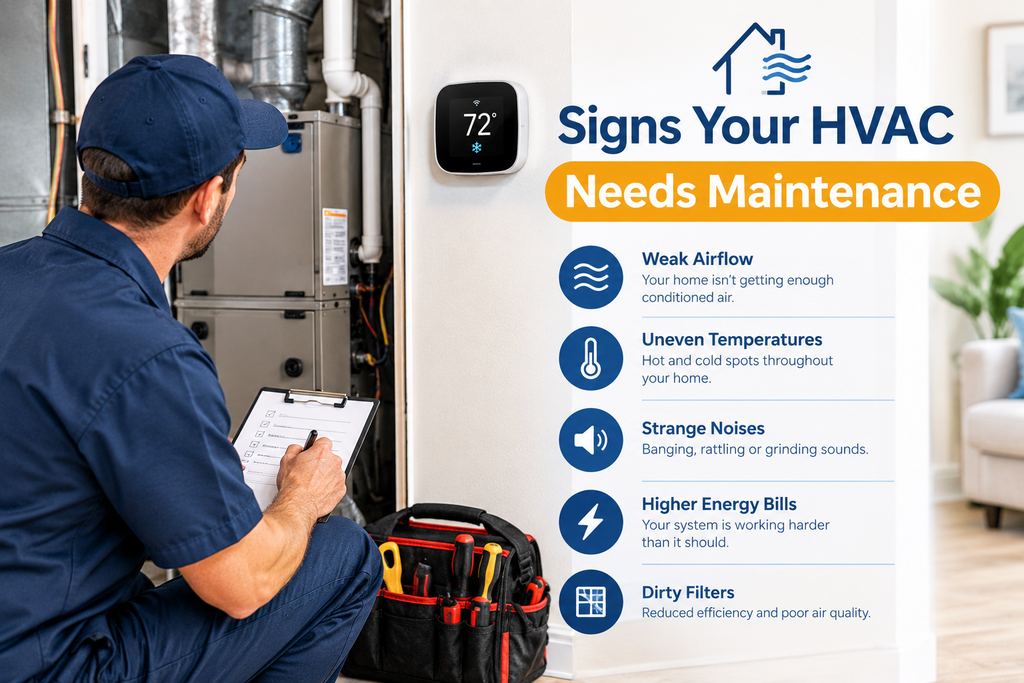
An HVAC breakdown rarely happens without warning it’s usually preceded by small, easy-to-dismiss signals that most homeowners simply don’t recognize until the system fully gives out. Strange noises, uneven temperatures, rising bills, weak airflow, and frequent cycling are all worth paying attention to, especially heading into a Massachusetts winter where a broken furnace isn’t just inconvenient, it’s genuinely uncomfortable. Scheduling routine HVAC Maintenance before these signs escalate tends to be far less expensive, and far less stressful, than dealing with a full breakdown when you least expect it.
FAQs
1. What are the most common signs my HVAC system needs maintenance?
The most common signs include strange noises, uneven heating or cooling, rising energy bills, weak airflow, and frequent cycling on and off all worth addressing before they lead to a full breakdown.
2. How often should I schedule HVAC maintenance in Massachusetts?
Most professionals recommend two maintenance visits per year once before heating season and once before cooling season though specific timing can vary based on your system type and age.
3. Can ignoring small HVAC issues lead to bigger repairs?
Yes, minor issues like dirty filters or loose components often escalate into more expensive repairs if left unaddressed, which is why routine maintenance visits matter for catching problems early.
4. Is it better to repair or replace an aging HVAC system?
It depends on the system’s age, repair history, and efficiency; systems over 15 years old with frequent repair needs often become more cost-effective to replace than continue repairing.
5. Do Ductless Mini Splits and Heat Pumps need the same maintenance as traditional furnaces?
While the core principle of regular maintenance applies to all systems, Ductless Mini Splits and Heat Pumps have some specific maintenance needs, like refrigerant level checks, that differ slightly from traditional furnace upkeep.