
Few household surprises are as stressful as opening the fridge and feeling warm air on your face. Food spoils quickly once the temperature climbs above the safe zone, and every hour counts. If your refrigerator is not cooling, the cause is often something you can identify in a few minutes, though some problems need a trained technician. This guide walks through the eight most common causes, explains what each symptom means, and shows when it is time to stop troubleshooting and book refrigerator repair.
Why Is My Fridge Not Cold? Start With the Basics
Before assuming something serious, check the simple things. Start by verifying that the cord fits snugly in the socket and that power is reaching it, for example by testing the outlet with a small lamp. Look at the temperature dial or digital display, because settings get bumped during cleaning or when someone reaches past the controls. The fridge section should sit near 37°F and the freezer near 0°F.
Also consider how the appliance is being used. A packed refrigerator blocks the vents that circulate cold air, and a door that was left slightly open overnight can raise the internal temperature quickly. If those checks come back clean, one of the following eight causes is the likely culprit.
Dirty Condenser Coils
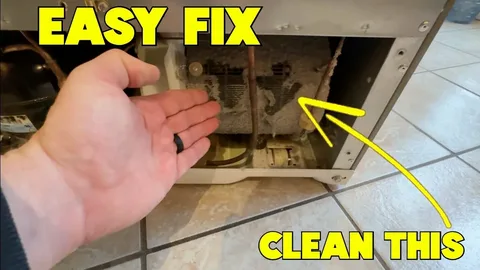
The condenser coils release heat pulled from inside the cabinet. When dust, pet hair, and kitchen grease coat them, heat cannot escape, and the system runs longer without cooling effectively. Many people asking why is my fridge not cold discover that neglected coils are the answer. Unplug the unit, clean the coils with a coil brush and vacuum, and see whether performance improves over the next several hours. Giving them a good cleaning every six to twelve months keeps the fridge running efficiently.
A Failed Condenser Fan
Near the coils, a small fan moves air across them to carry heat away. If its motor burns out or the blades are jammed with debris, the coils overheat and cooling drops. A common sign is a refrigerator not cooling but compressor running, since the compressor keeps working without ever getting the relief the fan should provide. You may notice the back of the unit feels unusually hot or the usual fan hum is missing.
A Faulty Evaporator Fan
Inside the freezer compartment, the evaporator fan pushes cold air into the fresh food section. When that fan stops, the freezer may stay frozen while the refrigerator side warms up. That pattern explains many cases of a refrigerator not cooling but freezer is fine. Listen for a grinding or squealing noise, or no fan sound at all, when the freezer door is open and the door switch is pressed. A bad evaporator fan motor is a common repair and is usually straightforward for a technician to replace.
Defrost System Failure
Frost naturally forms on the evaporator coil, and a heater, timer, and thermostat work together to melt it periodically. If any of those parts fail, frost thickens until it blocks airflow completely. The symptom is a refrigerator warm but freezer cold, often with a visible wall of ice at the back of the freezer. You can sometimes restore cooling temporarily by unplugging the unit and letting it thaw for a full day, but the problem will return until the failed defrost part is replaced. Treat this as a sign to schedule service rather than a permanent fix.
A Malfunctioning Thermostat or Temperature Sensor
The temperature control tells the compressor when to start and stop. If it misreads the cabinet temperature, the system may shut off too early or never turn on. Digital models rely on sensors that can drift or fail, while older mechanical models use a dial with a thermostat that wears out. If the settings look correct yet the compartment stays warm, a faulty control is a likely suspect. Testing it requires a multimeter and some experience, so this is generally a job for a professional.
Worn Door Gaskets
The flexible gasket lining the door edge holds cold air inside and blocks warm room air from getting in. Over time it cracks, hardens, or collects food residue and stops sealing properly. Warm air then leaks in constantly, the compressor never catches up, and you may see condensation or frost near the door edges. You can check the seal with a single bill: shut the door on it and tug gently. If the bill pulls free without any drag, the gasket is not sealing tightly. Cleaning the gasket with warm soapy water sometimes helps, and replacing it is an inexpensive repair.
Compressor or Start Relay Problems
The compressor is the heart of the sealed system, and it relies on a start relay and overload protector to get running. When those small parts fail, you may hear a repeated clicking sound every few minutes as the unit tries to start and shuts off. In other cases the compressor hums but cools very little. If you notice either symptom, avoid repeated restarts and call a technician. Diagnosing whether the issue is a cheap relay or a failing compressor determines whether repair makes sense or replacement is the wiser choice.
A Refrigerant Leak
Refrigerant carries heat out of the cabinet, and unlike gas in a car, it should never run low. If it does, there is a leak somewhere in the sealed system. Signs include a compressor that runs constantly, a freezer that never gets properly cold, and an evaporator that frosts unevenly. This repair requires certified handling and specialized tools, so it is never a do-it-yourself project. Your repair professional can locate the leak, advise on cost, and help you decide whether repair is worthwhile for the age of the appliance.
Refrigerator Not Cooling After Power Outage
A storm or utility interruption can leave you with a refrigerator notcooling after power outage even though the lights come back on. Sometimes the compressor simply needs time to restart, and normal temperatures return within several hours. Other times, a power surge has damagedthe control board, relay, or compressor, and the fridge stays warm no matter how long you wait.
Give the appliance up to a day after power returns. Keep the doors closed during that time, since a closed refrigerator holds safe temperatures for roughly four hours and a full freezer for about 48 hours. If the unit remains warm after that, unplug it for a few minutes, plug it back in, and recheck. If nothing changes, call for professional diagnosis. Discard any perishable food that sat above 40°F for more than two hours.
When to Call a Professional for Refrigerator Repair
Cleaning coils, adjusting settings, and checking gaskets are reasonable homeowner tasks. Anything involving electrical components, sealed system parts, or refrigerant should go to a technician. Call for refrigerator repair if you hear repeated clicking, notice burning smells, see heavy ice buildup that returns after defrosting, or find the unit still warm after you have ruled out the basics.
Age matters too. A refrigerator past ten to twelve years old with a major component failure may cost more to repair than it is worth. A trained technician can give you an honest comparison of repair costs versus replacement so you make a confident decision instead of a rushed one.
How JM Repair and Service Can Help
At JM Repair and Service, we focus on clear diagnosis, honest recommendations, and respect for your time. Our technicians understand how cooling systems behave, which is why we are comfortable working on the same principles that drive both appliances and larger comfort systems. Refrigeration relies on the same core ideas as air conditioning and heat pumps: moving heat from one place to another using refrigerant, fans, coils, and controls.
That experience carries over to the rest of your home. If your household comfort equipment needs attention, we provide heating and cooling repair, heating and cooling maintenance, and full HVAC inspection services. Homeowners who want reliable, efficient equipment can rely on us for HVAC maintenance and HVAC system installation when it is time for an upgrade, along with HVAC replacement when an older unit reaches the end of its life.
We also handle the full range of heat pump work, including heat pump installation, heat pump repair, heat pump maintenance, heat pump service, and heat pump replacement. For ductless systems, our team offers mini split maintenance and mini split repair. When cold weather arrives, furnace maintenance and heating repair service keep your home warm and your system running safely. Whatever the problem, you get a straightforward answer and a fair estimate.
Preventing Future Cooling Problems
Prevention is cheaper than repair. Vacuum the condenser coils twice a year, keep the refrigerator about an inch away from the wall for airflow, and avoid overloading shelves so air can circulate. Wipe door gaskets regularly, keep the temperature set correctly, and use a surge protector if power fluctuations are common where you live. A regular maintenance mindset applies to your whole home, which is why routine HVAC maintenance and annual inspections of your heating and cooling equipment help prevent sudden failures during the hottest or coldest weeks of the year.
Final Thoughts
A refrigerator not cooling is stressful, but it is rarely a mystery. Dirty coils, failed fans, defrost trouble, bad gaskets, thermostat issues, relay failures, and refrigerant leaks account for most cases, and the specific symptoms usually point toward the cause. Start with the simple checks, protect your food, and call a professional when the problem involves electrical or sealed system components. For dependable refrigerator repair and expert help with your home’s heating and cooling systems, contact JM Repair and Service today.
Frequently Asked Questions
Why is my refrigerator not cooling but the freezer is fine?
This usually points to an airflow problem between the two compartments. A failed evaporator fan, a frozen evaporator coil from defrost failure, or a stuck air damper are the most common causes. Because the freezer section stays cold, the issue is typically distribution, not the compressor itself.
What does it mean when a refrigerator is not cooling but the compressor is running?
The compressor is working, but something is stopping cold air from reaching the cabinet. Possible causes include dirty condenser coils, a failed condenser fan, a refrigerant leak, or a blocked evaporator. If the compressor runs constantly without lowering the temperature, call a technician.
How long should I wait for a refrigerator to cool down after a power outage?
Allow roughly 24 hours with the doors closed. If it is still warm after a full day, the control board, relay, or compressor may have been damaged by the outage or a surge, and professional refrigerator repair is the next step.
Is it worth repairing a refrigerator that is not cooling?
It depends on age and the failed part. Fans, thermostats, gaskets, and relays are usually affordable to fix. If the unit is over ten to twelve years old and the problem is the compressor or a refrigerant leak, replacement may be the better investment. A technician can compare both costs for you.
Can I fix a warm refrigerator and cold freezer myself?
You can safely check settings, clear vents, clean the coils, and inspect the door seals. A refrigerator warm but freezer cold situation often involves the evaporator fan or defrost system, which require electrical testing and parts replacement. Those repairs are best left to a professional.