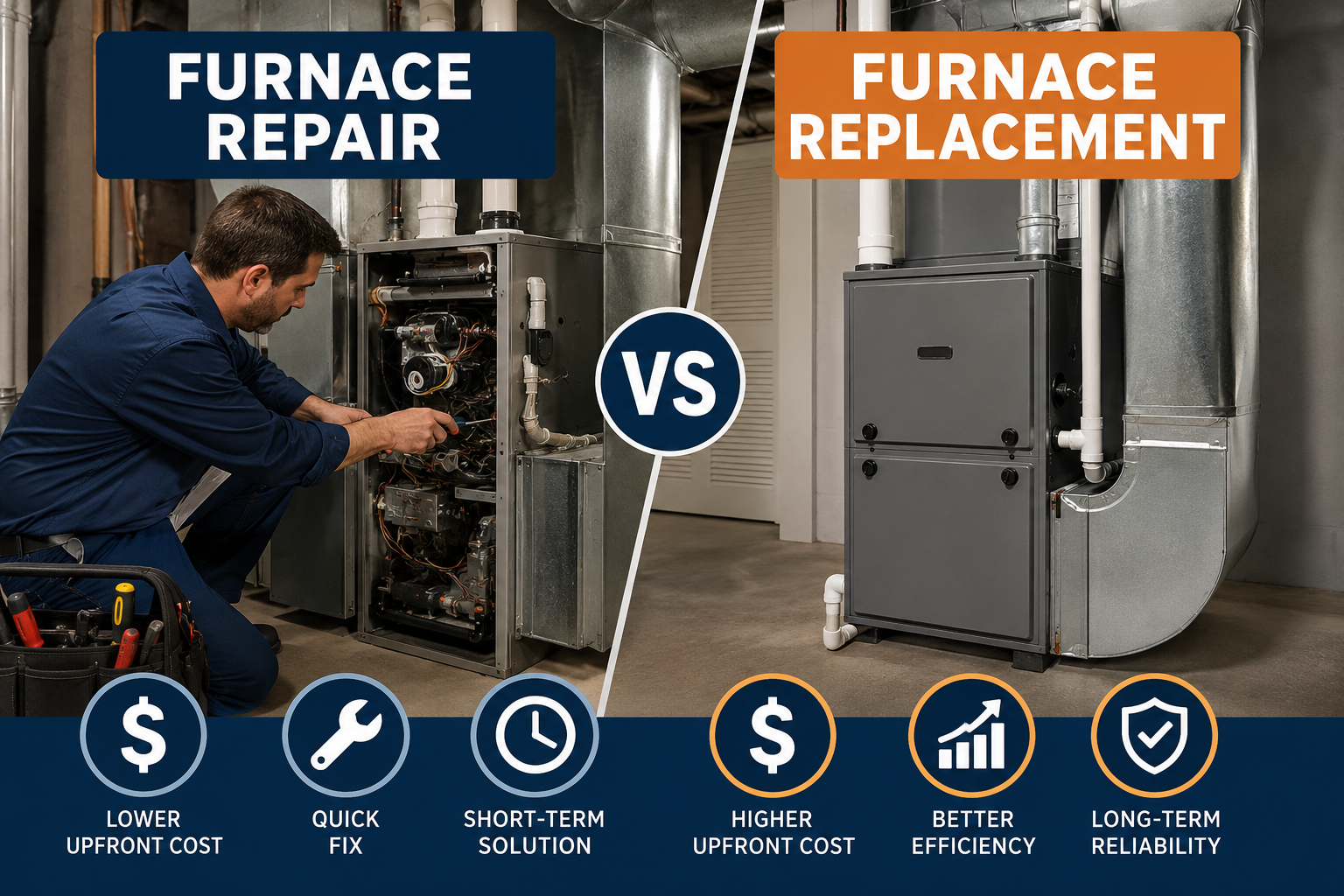
Every homeowner who’s heard their furnace make an unfamiliar sound in late November knows the specific flavor of dread that follows. Working through furnace repair vs replacement doesn’t have to feel like a coin flip, though a handful of concrete indicators point clearly toward one path or the other, and knowing them ahead of time beats figuring it out while standing in a 55-degree living room. Below, we’ll walk through what actually separates a quick fix from a system on its way out, what furnace repair cost tends to look like in practice, and when spending more upfront on replacement actually saves money down the line.
Southeastern Massachusetts doesn’t give homeowners much margin here. A furnace that’s been quietly underperforming since Halloween tends to give out completely during the coldest stretch of January exactly when you need it most and exactly when getting help takes longest.
The Timing Problem Nobody Talks About
Furnaces have an uncanny habit of failing at the worst possible moment, and it’s not really bad luck it’s physics. The unit that’s been struggling all fall finally hits its breaking point when demand peaks during a hard freeze, because every component is already under maximum strain right when you need maximum output. That’s exactly why so many people end up deciding this under duress instead of on their own terms.
Bringing in a technician for an inspection in October, before the real cold arrives, flips that script. Problems caught early get evaluated calmly, with time to compare options instead of turning into a frantic call for emergency HVAC repair at 2 a.m. during a cold snap.
When the System Itself Is Telling You It’s Done
Start with the birth certificate. Gas furnaces typically run 15 to 20 years before wearing out, and once a unit crosses that line, it’s living on borrowed time even if today it seems to be running fine the odds of a major, expensive failure climb steeply in those final years.
Pay attention to the repair count, too. Two or more furnace repair calls within a single season usually isn’t bad luck; it’s a system entering decline. At that point, each additional repair often just delays the same underlying failure from showing up again a few months later.
Watch your energy bill alongside your thermostat. A furnace loses efficiency slowly as it ages, quietly burning more fuel to deliver the same warmth a shift you won’t notice on the thermostat dial but will absolutely notice on the statement from your utility company. Pair that with rooms that never quite reach a comfortable temperature, and you’ve got some of the clearest signs you need a new furnace rather than another round of patchwork.
Odd sounds matter more than people assume. A bang, rattle, or high-pitched whine typically points to wear inside the blower motor or heat exchanger parts expensive enough to fix that replacement often ends up the more sensible move once they actually fail.
When Fixing It Is Still the Smart Move
Plenty of furnace trouble doesn’t mean the system is finished. A unit under a decade old dealing with one isolated problem a bad ignitor, a dying thermostat, a tripped limit switch is usually a solid repair candidate, particularly if it’s been kept up with regular service.
Smaller annoyances like a clogged filter or a thermostat that’s drifted out of calibration are quick, inexpensive fixes that don’t belong in a replacement conversation at all. These are precisely the sort of things a good HVAC Maintenance routine is built to intercept before they ever become noticeable problems.
If your furnace has a clean maintenance record and today’s issue is a single failed component rather than a string of breakdowns, repair usually costs a fraction of what replacement would and gets your heat working again the fastest.
What Furnace Repair Cost Actually Looks Like
Furnace repair cost swings widely depending on what’s broken. A new ignitor or thermostat sits toward the lower end of the spectrum, while bigger jobs replacing a blower motor or addressing a cracked heat exchanger cost considerably more and can start eating into a meaningful chunk of what a brand-new furnace would run.
That percentage is genuinely useful for decision-making. Plenty of HVAC technicians follow an informal rule: once a single repair quote climbs past roughly a third to half the price of full replacement especially on a furnace already past the 12- to 15-year mark replacement tends to be the better long-term bet.
Emergency or after-hours furnace repair almost always costs more than a scheduled weekday visit, which is one more reason a fall inspection tends to pay for itself compared to discovering the problem mid-crisis in January.
What Actually Happens During a Furnace Replacement
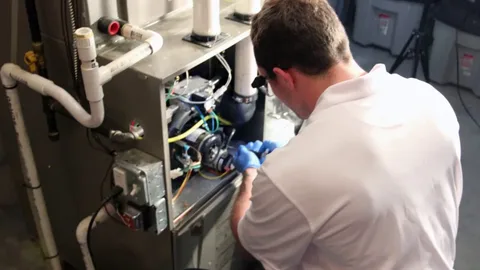
Swapping out a furnace involves more than dropping in a new box where the old one sat. A technician needs to calculate your home’s heating load factoring square footage, insulation quality, and layout to make sure the replacement is sized correctly, since both oversized and undersized units create years of comfort and efficiency headaches.
New furnaces also run noticeably more efficiently than models from even ten years ago, which means replacement frequently comes with real monthly savings that chip away at the upfront cost over time. Pairing HVAC Installation with a quick ductwork check keeps those efficiency gains from leaking out through poorly sealed distribution lines.
Options Beyond a Straight Furnace Swap
Replacement doesn’t have to mean buying the exact same type of system again. Heat Pumps have grown into a legitimate alternative for homeowners who want one system handling both heating and cooling, and today’s cold-climate heat pump models genuinely hold up through New England winters when sized and installed correctly.
For homes with a room that’s never quite comfortable a finished attic, a bonus room addition, a stubborn bedroom above the garage Ductless Mini Splits deliver targeted heating and cooling without extending existing ductwork, making them worth raising during any furnace replacement discussion rather than defaulting straight back to another central system.
Maintenance Decides How Long Either Choice Lasts
Repair or replace, the thing that determines how long your decision holds up is what happens afterward. Regular HVAC Maintenance catches the small stuff a fraying belt, a dirty flame sensor, an early refrigerant issue long before it snowballs into the kind of failure that forces a call for HVAC Repair on the coldest night of the season.
A furnace that gets serviced consistently also tends to run more efficiently over its entire lifespan, and that efficiency shows up directly in lower monthly heating costs. Skipping maintenance to save a little now tends to cost more later, whether through emergency repair bills or a system that simply doesn’t last as long as it should have.
The Rest of the House Doesn’t Pause for a Furnace Problem
Heating trouble rarely arrives in isolation. If a rough patch brings furnace issues alongside a dying refrigerator or a washing machine that’s given up, Appliance Repair handles that separately but with the same urgency nobody wants a heating emergency and a fridge full of spoiled groceries competing for attention in the same week.
Business owners running commercial kitchens face a parallel version of this decision with their equipment. Refrigeration Repair for walk-in coolers and commercial units follows nearly identical logic to a home furnace: age, repair frequency, and cost relative to replacement all shape the smartest call for keeping a restaurant’s cold storage dependable.
Get a Real Look Before You Commit Either Way
The most reliable way to settle furnace repair vs replacement is a hands-on inspection from someone qualified to evaluate the whole system the heat exchanger, carbon monoxide risk, overall efficiency rather than guessing based on how the furnace sounds from the hallway.
Bring the furnace’s age, any past repair records, and a few recent energy bills to that visit. Those details let a technician see the pattern behind today’s issue instead of treating it as an isolated event, and recommend whichever path actually fits your system and budget.
Deciding Before the Real Cold Arrives
If your furnace is under 12 years old and dealing with one isolated problem, repair is usually the sensible, budget-friendly call. If it’s older, breaking down repeatedly, or the repair quote is creeping toward half the price of a new unit, replacement protects you from a mid-winter failure and typically pays for itself through better efficiency.
Whichever way your situation points, working with a technician who handles HVAC Installation, HVAC Repair, HVAC Maintenance, Furnaces, Heat Pumps, and Ductless Mini Splits under one roof means the recommendation you get is based on your system’s actual condition not whichever option happens to be easiest to sell.
Frequently Asked Questions
How do I know if I need furnace repair or replacement?
A furnace under 12 years old with one isolated issue usually just needs repair. Frequent breakdowns, climbing energy bills, or a unit past 15-20 years old are signs you need a new furnace rather than another fix.
What does furnace repair cost typically run?
It depends heavily on the problem a thermostat or ignitor swap costs relatively little, while major repairs like a blower motor replacement cost significantly more, sometimes approaching a large share of what full replacement would cost.
At what age should I stop repairing my furnace and replace it instead?
Most furnaces last 15 to 20 years. Once a unit reaches that range and needs a costly repair, replacement usually delivers better value than continuing to patch an aging system.
Can a heat pump replace an old furnace effectively?
Yes modern cold-climate heat pumps handle heating and cooling efficiently even through Massachusetts winters, making them a legitimate alternative worth considering during any furnace replacement decision.
How often should HVAC maintenance happen to avoid furnace breakdowns?
Most technicians recommend one HVAC maintenance visit per year, ideally in early fall, so small issues get caught before winter demand pushes the system toward its limits.